Heritage brands occupy a unique place in the market. Your story is deep, your identity is enduring, and your customers have often been loyal for generations. However, the world is shifting. Younger consumers shop online first, and digital channels are evolving faster than ever.
For a legacy company in 2025, using Google Ads effectively is not just about visibility. It is about preserving your history while competing in a fast-moving landscape.
Many heritage brands worry that digital advertising feels “cheap” or “intrusive”. We are here to tell you that it does not have to be. Below, we explore how to use Google Ads to amplify your legacy without sacrificing your charm or core values.
Why Tradition Needs Technology
Many heritage brands still rely heavily on word-of-mouth, print advertising, and the loyalty of longstanding customers. While these are valuable, they are no longer enough on their own.
Here is why a solid Google Ads strategy is essential for your future.
1. Reaching the Next Generation
Younger demographics value authenticity and craftsmanship, but they search for it online. If you are not on Google, they will not find you. Ads allow you to introduce your centuries-old story to a 25-year-old customer who is looking for quality that lasts.
2. Reactivating Lapsed Customers
You likely have customers who bought from you years ago but have drifted away. Google Ads allows you to gently remind them of your enduring quality and invite them back.
3. Data-Driven Storytelling
Google Ads provides incredible data. It gives you insight into modern search behaviour and tells you exactly which parts of your history resonate most with today’s buyers. This feedback loop helps you evolve your storytelling while staying true to your roots.
Building a Strategy That Respects Your Past
Unlike a trendy start-up, a heritage brand must tread carefully. A “clickbait” headline or aggressive sales tactic might deliver a quick sale, but it risks undermining decades of trust.
Here is how to build a campaign that honours your brand.
4. Keywords: Quality Over Quantity
Do not waste budget on generic terms. Focus on your specific attributes.
The Wrong Way: Bidding on generic terms like “leather bags” or “chocolate”.
The Heritage Way: Bidding on phrases like “handmade English leather satchels” or “luxury chocolates since 1890”. These terms attract serious buyers who value provenance.
5. Ad Copy: The Voice of Authority
The magic of Google Ads for heritage brands lies in the tone. Where young brands might use slang or gimmicks, you should convey authenticity.
Example A: “Discover craftsmanship perfected over a century.”
Example B: “Savour our original family recipe, reimagined for today.” Use A/B testing to find the perfect balance between tradition and modern appeal. Always prioritise clarity and dignity over noise.
6. Precise Audience Targeting
Google allows you to segment your audience with incredible precision. You can create one campaign for “legacy enthusiasts” who know your history, and a separate campaign for “newcomers” who are discovering you for the first time. This ensures your message always lands correctly.
Tactics for the Modern Legacy Brand
Once the foundation is set, use these specific tactics to drive growth without being pushy.
7. Thoughtful Remarketing (The Gentle Nudge)
Remarketing often gets a bad reputation for being annoying, but it can be elegant. Treat it as a premium invitation rather than a hard sell.
Strategy: Use ads to showcase limited editions, anniversary collections, or behind-the-scenes footage of your factory or archives.
The Goal: Deepen the relationship by sharing your world, rather than just pushing a product.
8. Metrics Beyond the Sale
While we want to drive revenue, heritage brands must also measure reputation.
Quantitative: Measure clicks and conversions via Google Analytics 4 (GA4) to ensure profitability.
Qualitative: Monitor how your ads affect brand sentiment. Are people leaving positive reviews? Are they sharing your story on social media? A great Google Ads programme reinforces your trustworthiness.
9. Visual Storytelling
Heritage brands often have beautiful products. Use Performance Max campaigns to display high-quality imagery of your craftsmanship across Google’s network. A video of a watchmaker assembling a movement by hand can sell a product faster than any text ad.
Conclusion: Embracing the Future
Heritage brands face a delicate balancing act. You must modernise your marketing to remain relevant, yet you must preserve the authenticity that makes you beloved.
Google Ads is not just a tool for driving clicks. It is an invitation to new audiences and a way to write fresh chapters in your storied narrative.
As consumer expectations evolve, brands that blend data-driven tactics with genuine respect for their history will continue to thrive. After all, the most enduring brands are those that honour their past while embracing the tools of tomorrow.
🚨 Preserve Your Legacy & Grow Your Sales Is your marketing stuck in the past? Contact Bizi Digital today for a complimentary strategy session. Let us show you how to translate your heritage into a modern, profitable Google Ads strategy.
Understanding what your customers want is key to business success. By studying how people shop and live, you can create marketing that truly speaks to them. This leads to loyal customers, more sales, and a better return on your investment.
With Artificial Intelligence (AI) growing fast, a big question comes up: Is AI better than a human at making decisions?
Advertisers need to choose between trusting AI speed or human instinct. AI is fast and accurate, while humans are creative and understanding. So, which is best for your Google Ads? Let’s find out.
Advantages of AI Decision-Making
Speed and Efficiency: AI can read huge amounts of data much faster than any person. It can fix and improve your campaigns in real-time, saving you money.
Spotting Trends: Google’s AI finds patterns in how people act online instantly. This leads to smarter strategies and more sales (higher conversion rates).
Consistency: AI doesn’t get tired or have personal biases. It follows logic to keep your ads running smoothly without errors.
Advantages of Human Decision-Making
Creativity: Humans come up with new, imaginative ideas for ad text and images that machines can’t match.
Strategy: Experienced marketers understand the “big picture.” They can adjust plans based on business goals and world events in ways AI cannot.
Empathy: Humans can connect with feelings. A human touch ensures your ads match your brand’s values and build real relationships with customers.
The Winning Strategy: Combine Both
The best Google Ads campaigns use both AI power and human skill.
Balance Strengths: Let AI handle the heavy data and patterns. Use humans for the creative spark and “common sense” checks.
Monitor and Adjust: Humans should always check AI’s work to catch mistakes early.
Personalize: Use AI to find your audience, then use human writing to send them a message that feels personal.
Conclusion
Google Ads has changed a lot with AI. AI brings speed and data power, while humans bring creativity and heart.
The winner isn’t one or the other—it’s both together. Let AI do the boring, repetitive work, and let humans handle the complex thinking and creativity. By working together, you get the best of both worlds: high performance and real customer connection.
In a surprising turn of events, Anthony Chavez, VP of Privacy Sandbox at Google, announced on 22 July 2024 that the company has paused its plans to phase out third-party cookies in its Chrome browser, a move that appears to signal a potential abandonment of this initiative, at least for now. This significant policy shift comes after extensive feedback from various stakeholders, including advertisers, publishers and regulators such as the UK’s Competition and Markets Authority (CMA). Let’s take a look at what this means for digital advertising and how we can adapt to these changes.
Understanding the Reversal to Phaseout Third-Party Cookies
THE INITIAL PLAN to Phase Out Third-Party Cookies
For several years, Google has been vocal about its intention to improve user privacy by eliminating third-party cookies from Chrome. This move was part of a broader industry trend towards a more privacy-centric web environment. Originally planned for 2022, and later pushed back to 2023 (read all about it here), the phase-out plan aimed to protect user data from intrusive tracking methods. However, the complexity of developing a viable alternative that balances user privacy with the needs of advertisers has proven challenging.
THE NEW APPROACH for User Privacy and Ad Performance
Google’s updated strategy now focuses on giving users more control over their privacy settings. Anthony Chavez, VP of Privacy Sandbox at Google, explained that the company will introduce a new experience in Chrome, allowing users to make informed choices about their privacy. This approach aims to balance privacy needs with practical advertising requirements by continuing to develop Privacy Sandbox APIs designed to protect user privacy without compromising ad performance.
In a blog post published on The Privacy Sandbox site, its Vice President Anthony Chavez said:
Stakeholder Feedback Drives Google’s Decision to Retain Third-Party Cookies
This reversal is largely driven by feedback from various stakeholders. Advertisers and publishers have raised concerns about the potential impact on their ability to target and personalise ads effectively. Regulators, including the CMA, have scrutinised Google’s initial plans and stressed the need for a balanced solution that does not stifle competition in the digital advertising space.
Aaron Grote, VP of Digital Products at Stirista, commented on this decision:
“Google’s announcement is being largely misread in the initial frenzy of hot takes. When the dust settles, people will realize that Google did not announce that 3rd party cookies will be sticking around. Instead, Google announced that they are changing the way 3rd party cookies will be made unavailable. The ‘new experience in Chrome’ that puts cookie choices in front of users in more direct ways will have the same net effect as a top-down deprecation and could even achieve that effect in a shorter timeframe. People will wake up a few days from now and realize that the fundamental dynamics have not changed and that advertisers and their agencies should pursue a diversified and cookieless suite of targeting strategies to grow their brands.”
What Does This Google Update Mean for Our Clients?
Stability in Ad Strategies
For our clients, this means that they can continue to use third-party cookies for audience targeting, remarketing and personalisation. This continuity allows current campaign performance levels to be maintained without the need for immediate drastic changes.
Exploring First-Party Data Strategies
Encouraging our clients to strengthen their first-party data collection efforts is more important than ever. Investing in CRM systems, contextual targeting, and data partnerships can help mitigate the impact of any future changes to third-party cookie policies. This proactive approach will ensure our clients are well-prepared for the evolving digital environment.
Improved privacy controls
Google’s introduction of new privacy controls means that our clients’ audiences have more choice about their privacy settings. This transparency can build trust with consumers, fostering stronger relationships and improving brand loyalty.
Focus on Privacy Sandbox
While third-party cookies are here to stay, it’s important for our customers to stay informed about Privacy Sandbox developments. These technologies are designed to provide privacy-preserving alternatives, and understanding them will be critical as they gain traction.
Compliance and Trust
Our clients must continue to prioritise compliance with regulations, such as GDPR and CCPA, as these remain essential regardless of changes to third-party cookie policies. Transparent data practices and respect for user privacy are essential to maintaining consumer trust. Google’s User Choice Prompt is consistent with these principles, and provides a model for how to effectively manage data privacy.
Implications for PPC Advertisers
Continuity in Ad Strategies
The continuation of third-party cookies means that PPC advertisers can maintain their current strategies for audience targeting, remarketing, and personalisation for now. However, they should remain vigilant and continue preparing for the eventual transition to Privacy Sandbox and other privacy-preserving technologies. This temporary stability allows for the ongoing optimisation of campaigns and the achievement of desired marketing results.
Privacy Sandbox Developments
While third-party cookies remain, it’s crucial to stay informed about developments in Google’s Privacy Sandbox. These technologies aim to provide privacy-preserving alternatives to third-party cookies. Understanding and integrating these new tools will be vital as they become more widely adopted.
Compliance and User Trust
Advertisers must continue prioritizing compliance with regulations such as GDPR and CCPA. Building trust with users through transparent data practices remains essential. Google’s new user-choice prompt, similar to Apple’s app tracking opt-in, is a step in this direction, allowing users to control their data privacy settings.
Exploring Alternative Solutions
Diversifying data sources and leveraging first-party data strategies will become increasingly important. Investing in solutions such as contextual targeting, data partnerships, and robust CRM systems can mitigate the impact of future changes to third-party cookie policies.
To explore these strategies in more detail, read the section on Solutions to Strengthen First-Party Data Collection and Utilization further down in this article.
Strategic Takeaways in Light of Google’s Cookie Policy Reversal
Stay Updated
Monitor Google’s updates on third-party cookies and Privacy Sandbox developments on a regular basis. By being proactive, you can adjust your strategies quickly and effectively.
Test and Learn
Use this newly won extra time to experiment with alternative targeting methods and gain insight into their effectiveness. Testing new approaches can help future-proof your strategies against potential disruptions.
Invest in First-Party Data
Strengthen your first-party data collection and utilisation processes. This data is invaluable for creating personalised and effective marketing campaigns. Explore ways to improve data collection through lead generation forms, customer surveys and loyalty programmes.
Educate Clients and Stakeholders
Just like us in this blog post, make sure you keep your customers and internal stakeholders informed about these changes and their potential impact. Position yourself as a knowledgeable and forward-thinking PPC expert by offering insights and strategic recommendations.
“As this moves forward, it remains important for developers to have privacy-preserving alternatives.”
– Anthony Chavez, VP of Privacy Sandbox at Google
Solutions to Strengthen First-Party Data Collection and Utilisation
1. Audit and Optimise Data Collection
Data Audit: Start by auditing your existing data sources to ensure you have access to solid and clean data. Use tools like Customer Data Platforms (CDPs) to centralise and manage your data effectively.
Data Integration: Integrate data from various touchpoints including websites, mobile apps, social media, and offline interactions. This integration helps create a unified view of each customer, allowing for more precise targeting and personalised marketing efforts.
2. Improve Data Quality
Content Optimisation: Focus on improving the quality of your content to ensure it provides value to users. This includes optimising your website for search visibility and providing engaging, high-quality content that attracts and retains visitors.
SEO and UX: Implement technical SEO best practices and improve the user experience on your website to improve visibility and engagement. A well-optimised website supports better data collection by keeping visitors engaged and willing to share their information.
3. Personalisation Strategies
Segmentation and Targeting: Use first-party data to segment your audience based on demographics, behaviour, and purchase history. Tailor your messaging and offers to these segments for more effective marketing.
Dynamic Retargeting: Implement dynamic retargeting based on users’ interactions with your website or app. Personalise ads to display products or services that users have previously viewed but not purchased, encouraging them to complete their purchase.
Lookalike Audiences: Create lookalike audiences from your high-value customers and target these new prospects with personalised ads. This strategy helps expand your reach while maintaining a high level of relevance.
4. Trust and Transparency
Transparent Data Practices: Building trust with customers by being transparent about the data you collect and how it is used is crucial. Clear consent mechanisms and providing users with control over their data preferences are widely recommended practices.
Progressive Profiling: Gradually collecting more detailed information about customers through progressive profiling enhances the ability to personalise their experience without overwhelming them.
5. Leveraging Technology
MarTech Investments: Investing in marketing technology that simplifies the collection and use of first-party data, including analytics tools, CRM systems and marketing automation platforms, is essential for effective data management.
Data Analysis: Use advanced analytics to gain insights from your first-party data. This can help you understand customer behaviour and preferences, optimise your campaigns and improve customer retention.
For more detailed guidance, you can refer to resources from
Or contact us, and we’ll see how we can support you!
Practical Steps to Implement for Effective First-Party Data Collection and Personalisation
Lead Generation Campaigns: Use lead gen forms on your website, social media, and other platforms to collect email addresses and other user information. Tailor the form fields to the specific channel and audience to maximise sign-ups (WordStream)
Customer Journey Mapping: Track interactions across different touchpoints to get a comprehensive view of the customer journey. This helps create personalised experiences at every stage of the funnel (Vaimo).
Email and Content Personalisation: Use the data collected to send personalised emails and create content that resonates with specific audience segments. This increases engagement and conversion rates (Digital Marketing Institute) (Mediatool).
By focusing on these strategies and implementing these steps, you can effectively strengthen your first-party data collection and utilization processes, leading to enhanced targeting and personalization efforts.
Final Thoughts
Google’s decision to abandon the phaseout of third-party cookies provides a reprieve for PPC advertisers but underscores the importance of staying ahead of industry shifts. By preparing for the eventual transition to Privacy Sandbox and embracing privacy-first advertising strategies, we can continue to drive successful PPC campaigns in an ever-evolving digital landscape.
Stay tuned for more updates as we navigate these changes together.
Your feedback and experiences are invaluable—let’s discuss how we can adapt and thrive in this dynamic environment.
Don’t wait until the last minute; take these steps today to stay ahead of the competition and ensure your success in the ever-changing world of digital advertising.
As a leading Google Ads agency, we prioritise staying ahead of new regulations and updates. We want you to stay informed, too. Follow our Social Media accounts to ensure you never miss important updates.
If you would like to work with us and take full advantage of our expertise in navigating the ever-changing Google Ads landscape, don’t hesitate to reach out. We’re here to help you achieve your digital advertising goals. CONTACT US NOWto see how we can help you with your next project or campaign.
Editor’s Note (July 2024): Since the publication of this article, Google has reversed its decision to phase out third-party cookies in Chrome. This means third-party cookies will continue to be used until further notice, with new privacy controls allowing users to manage their preferences. For more details on this development and its implications, please refer to the latest updates on our blog:https://bizidigital.com/blog
In the dynamic world of digital advertising, we’re at the brink of major changes that need our focus and quick action.
The two pivotal shifts we’re facing are:
The phasing out of third-party cookies, fundamentally altering our approach to tracking and personalisation.
The mandatory implementation of Consent Mode V2 by March 2024 across the European Economic Area (EEA), reshaping our user consent and data processing strategies.
These key developments signal a move towards more privacy-centric advertising practices, challenging us to innovate and adapt our strategies accordingly.
In this blog post, we’ll break down what these big updates mean for us in digital ads and show you ways to stay on top of your game. Let’s look into these changes in and explore how they affect digital ad strategies and conversion tracking.
Understanding the Phase-Out of Third-Party Cookies
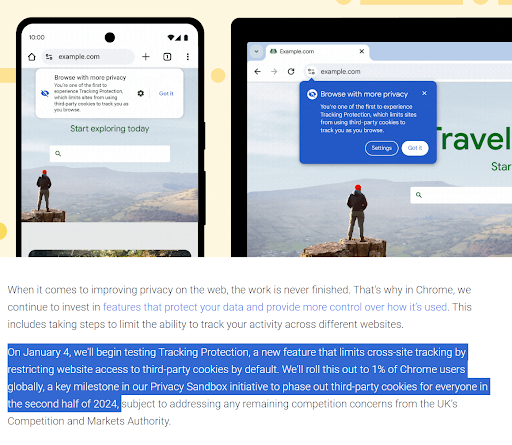
Let’s start with a significant change in online advertising and conversion tracking: Google’s plan to phase out third-party cookies in Chrome by the second half of 2024. They’ve started testing this with 1% of users from January 4th. Third-party cookies have been essential for creating personalised ads by tracking user behaviour across different sites. This shift is mainly about improving privacy, so we must adapt our strategies to reach our audience effectively.
What are third-party cookies, and what is their role in digital advertising?
Simply put, third-party cookies are small text files (or cookie crumbs :)) that websites you visit place on your computer, but they’re created by a website different from the one you’re currently on. For example, a cookie from an advertiser on the website you’re visiting. They help advertisers track your online activity across different sites to show targeted ads matching your interests.
For years, third-party cookies have been the cornerstone of digital advertising, allowing us to track user behaviour across sites for more targeted campaigns. However, their time is running out.
What does the phase-out of Third Party Cookies mean for conversion tracking and targeting
The phase-out of third-party cookies marks a big shift in how we track and target ads online. Advertisers will need new ways to understand user preferences and behaviour without these cookies, making it harder to show personalised ads. This change challenges marketers to find alternative methods for gathering insights and measuring the effectiveness of their campaigns, emphasising the need for innovation and adaptation in the digital advertising industry.
This move reflects broader industry and regulatory trends towards prioritising user privacy and seeking alternative ad targeting and personalisation methods.
With third-party cookies going away, Google introduces tools like the Privacy Sandbox and Protected Audience API. These tools help advertisers reach their audience while respecting privacy, without relying on third-party cookies.
Navigating Consent Mode V2 Requirements
Let’s now look into Google’s Consent Mode V2, a tool that helps us navigate the complexities of user privacy while still gathering valuable insights for our campaigns.
By March 2024, organisations using Google Ads, Google Analytics, and Google Marketing Platform will need to review and adjust their consent acquisition and signalling processes to continue running personalised advertising. Non-compliance will result in the inability to utilise ad personalisation features. Implementing a Google-certified Consent Management Platform (CMP) and integrating it with the latest version of Google Consent Mode is essential for signaling user consent to Google’s platforms effectively. This adaptation not only complies with legal requirements but also aligns with Google’s EU User Consent Policy, ensuring that ad campaigns and analytics maintain their effectiveness by respecting user consent choices.
Google Consent Mode V2 is a tool designed to help us navigate the shifting landscape of user privacy while still allowing us to gather valuable insights for our campaigns. In essence, it strikes a balance between respecting user privacy and ensuring that we can continue to optimise our advertising efforts effectively.
In simple terms, Consent Mode V2 assists us in adjusting how our tracking functions based on user consent preferences. This means that we can collect data more transparently and ethically while complying with privacy regulations. It’s like having a trusted guardian for your data collection practices, ensuring that we’re on the right side of user privacy.
According to Google’s research, a whopping 89% of internet users would trust brands more if they invested in privacy-safe technologies. So, as we explore Consent Mode V2 further, keep in mind that it’s not just a tool; it’s a crucial aspect of building trust with your audience and adapting to the changing digital landscape.
Set up Google Consent Mode in 3 easy steps
Adapting to these new requirements might seem daunting, but by taking crucial steps towards compliance, we can safeguard our advertising efforts and respect our users’ privacy preferences. Consent Mode V2 is crucial for your success with Google Ads in 2024 and beyond. Make sure you implement it BEFORE MARCH 2024.
Step 1: Integration with Consent Management Platform (CMP)
The first step in setting up Google Consent Mode is to integrate it with a Consent Management Platform (CMP). A CMP helps you manage and communicate user consent effectively. Google has partnered with various CMPs to simplify this process. Choose a CMP that suits your needs, integrate it into your website, and ensure it’s compatible with Google Consent Mode V2.
Step 2: Enable Consent Mode in Your Google Ads Tags
Once you’ve integrated a CMP, it’s time to enable Consent Mode within your Google Ads tags. Google provides detailed instructions on how to do this. Essentially, you’ll need to adjust your tags to respond to the consent status provided by the CMP. This step ensures that your tracking and ad personalisation align with user preferences while maintaining compliance with privacy regulations.
Step 3: Test and Monitor Your Setup
After integrating a CMP and enabling Consent Mode, it’s essential to thoroughly test your setup. Ensure that data collection and ad personalisation are functioning as intended based on user consent. Regularly monitor your setup to address any issues that may arise and make necessary adjustments to maintain compliance.
By following these three easy steps, you can set up Google Consent Mode V2 and adapt to the evolving digital advertising landscape while respecting user privacy preferences.
Strategies for obtaining and managing user consent under the new regulations.
Transparent Consent Requests: Make sure your consent requests are clear, concise, and easy to understand for users. Provide detailed information about the data you’re collecting, how it will be used, and whom it will be shared with. Transparency builds trust, and users are more likely to provide consent when they understand the implications.
Granular Consent Options: Offer users granular control over their data preferences. Allow them to choose which data types they are comfortable sharing and for what purposes. This approach respects user autonomy and privacy, increasing the likelihood of obtaining meaningful consent.
User-Friendly Consent Management: Implement user-friendly consent management tools on your website or app. This allows users to review and change their consent settings easily. Make it as simple as possible for users to withdraw or update their preferences at any time, ensuring ongoing compliance with their wishes.
These strategies help you comply with new regulations and build a positive relationship with your audience by demonstrating your commitment to privacy and user choice.
The outlook is promising for those willing to innovate and leverage first-party data and new tracking technologies, ensuring our campaigns remain effective and relevant.
Innovations and strategies for conversion tracking without third-party cookies.
Moving forward with Google Ads in a world without third-party cookies requires us to adjust and find new approaches. A key element of this transformation is the strategic use of first-party data and alternative tracking methods.
First-party data, sourced directly from your audience, becomes invaluable in understanding user behaviours and preferences. By harnessing this data, you can craft personalised campaigns that resonate with your audience while respecting their privacy.
Additionally, embracing alternative tracking methods, such as contextual advertising and cohort-based targeting, allows you to maintain the relevance and effectiveness of your campaigns.
These innovations ensure that your advertising efforts remain on the cutting edge, delivering results in a cookieless world.
Plus, keeping up with Google’s latest offerings, like the Privacy Sandbox and Protected Audience API, provides new avenues for respecting user privacy while effectively targeting audiences, aligning with the shift towards more privacy-focused advertising strategies.
These Google initiatives are designed to provide new methods for audience targeting and ad personalisation in a way that respects user privacy, which becomes crucial as third-party cookies are phased out. Integrating these into your strategies can help maintain effective advertising in the evolving digital landscape.
“In a future without third-party cookies, marketers will need to adopt more durable audience strategies.”
this statement underscores the importance of leveraging first-party data and exploring alternative tracking techniques to thrive in the evolving landscape of digital advertising.
These challenges of conversion tracking and user consent demand immediate attention. With the phasing out of third-party cookies and the mandatory adoption of Google Consent Mode V2, marketers face a big shift that could impact their advertising effectiveness.
The stakes are high: improper tracking could cripple the algorithm, resulting in suboptimal results and inefficient budget allocation. To succeed, take action now.
→ Implement Consent Mode V2 to comply with regulations and recover lost data.
→ Ensure you turn on Enhanced Conversions to measure previously untracked conversions and optimise your campaigns.
→ And don’t forget Server-Side Tagging, a necessity in a cookieless world.
Don’t wait until the last minute; take these steps today to stay ahead of the competition and ensure your success in the ever-changing world of digital advertising.
As a leading Google Ads agency, we prioritise staying ahead of new regulations and updates. We want you to stay informed, too. Follow our Social Media accounts to ensure you never miss important updates.
If you would like to work with us and take full advantage of our expertise in navigating the ever-changing Google Ads landscape, don’t hesitate to reach out. We’re here to help you achieve your digital advertising goals.
Manage Consent
To provide the best experiences, we use technologies like cookies to store and/or access device information. Consenting to these technologies will allow us to process data such as browsing behavior or unique IDs on this site. Not consenting or withdrawing consent, may adversely affect certain features and functions.
Functional
Always active
The technical storage or access is strictly necessary for the legitimate purpose of enabling the use of a specific service explicitly requested by the subscriber or user, or for the sole purpose of carrying out the transmission of a communication over an electronic communications network.
Preferences
The technical storage or access is necessary for the legitimate purpose of storing preferences that are not requested by the subscriber or user.
Statistics
The technical storage or access that is used exclusively for statistical purposes.The technical storage or access that is used exclusively for anonymous statistical purposes. Without a subpoena, voluntary compliance on the part of your Internet Service Provider, or additional records from a third party, information stored or retrieved for this purpose alone cannot usually be used to identify you.
Marketing
The technical storage or access is required to create user profiles to send advertising, or to track the user on a website or across several websites for similar marketing purposes.