
Understanding AI Search Optimisation: The Future of Digital Marketing

Imagine your ideal customer is looking for you right now. That is the promise of AI search optimisation. It is a dynamic, data-driven approach that saves marketers time and delivers richer experiences to users.

If you have ever wondered how brands stay ahead in the shifting digital landscape, read on to discover how AI is transforming SEO as we know it.


What Is AI Search Optimisation?

AI search optimisation is the combination of artificial intelligence with traditional SEO practices. Rather than relying solely on manual tweaks and keyword stuffing, it uses smart technology to do the heavy lifting.

It relies on three core pillars:

  • Machine Learning: To detect patterns in massive sets of data.
  • Natural Language Processing (NLP): To understand the context and nuance behind what people type into Google.
  • Advanced Analytics: To track user behaviour and refine content automatically.

By interpreting what users truly mean when they search (whether by text, voice, or even image) AI ensures your content aligns perfectly with their intent. This boosts both your visibility and your engagement.


How It Works

It might sound like science fiction, but the process is actually quite logical.

1. Data Collection & Analysis

AI tools crawl your site and your competitors’ sites. They gather critical metrics such as click-through rates, how long people stay on a page, and where they click next.

2. Intent Mapping

This is the game-changer. NLP models dissect user queries to identify the underlying intent. Are they just researching? Are they comparing products? Or are they ready to buy immediately? AI knows the difference.

3. Smart Recommendations

Based on those insights, AI suggests structural changes. It might tell you to rewrite a heading or use natural keyword variations to make your page more relevant.

4. Automated Testing

AI can run continuous A/B tests on your headlines, meta descriptions, and content layouts. It learns which combinations deliver the best results so you do not have to guess.

5. Real-Time Adaptation

Search algorithms change constantly. AI recalibrates your strategy in real-time. No more waiting weeks for a manual audit to tell you something is wrong.


Why You Should Embrace It

There are four clear reasons to integrate AI into your SEO strategy today.

Efficiency Gains You can automate time-consuming tasks like updating meta tags, fixing internal links, and adding schema markup. This frees you up to focus on creative strategy.

Sharper Relevance You can tailor your content to match exactly what users want. This ensures every page on your site resonates with its audience.

Competitive Speed AI can detect emerging trends or algorithm shifts immediately. This enables you to pivot your strategy before your rivals even notice the change.

Higher ROI By delivering the right content to the right person at the right moment, you will see improved conversion rates. This means more sales for less effort.


Challenges to Consider

While powerful, AI is not a magic wand. You need to be aware of the hurdles.

Data Integrity AI is only as good as the data you feed it. If your data is incomplete or biased, the recommendations will be wrong.

Technical Complexity Integrating these tools may require developer support. Ensure your team has access to the necessary expertise.

Cost vs Benefit AI tools can be expensive. You need to evaluate the cost of subscriptions against the expected increase in traffic and sales.


Looking Ahead: The Next Frontier

As voice and visual search gain traction, AI will become indispensable. We are moving towards a world where users simply snap a photo or speak naturally to find what they want.

Personalisation will also deepen. AI will soon predict what a user needs based on their past interactions, their location, and even the time of day.

Ultimately, the brands that thrive will be those that view AI as a core component of their digital strategy. It is about continually learning, adapting, and delighting users at every turn.


Conclusion

AI search optimisation is far more than a buzzword. It is the catalyst for a smarter, faster, and more user-centric approach to SEO.

By embracing AI today, you will not only streamline your operations but foster genuine connections with your audience.

Ready to future-proof your strategy? Start by auditing your data and exploring AI platforms. If you need help mapping out a pilot project, contact Bizi Digital to see how we can help you stay ahead of the curve.
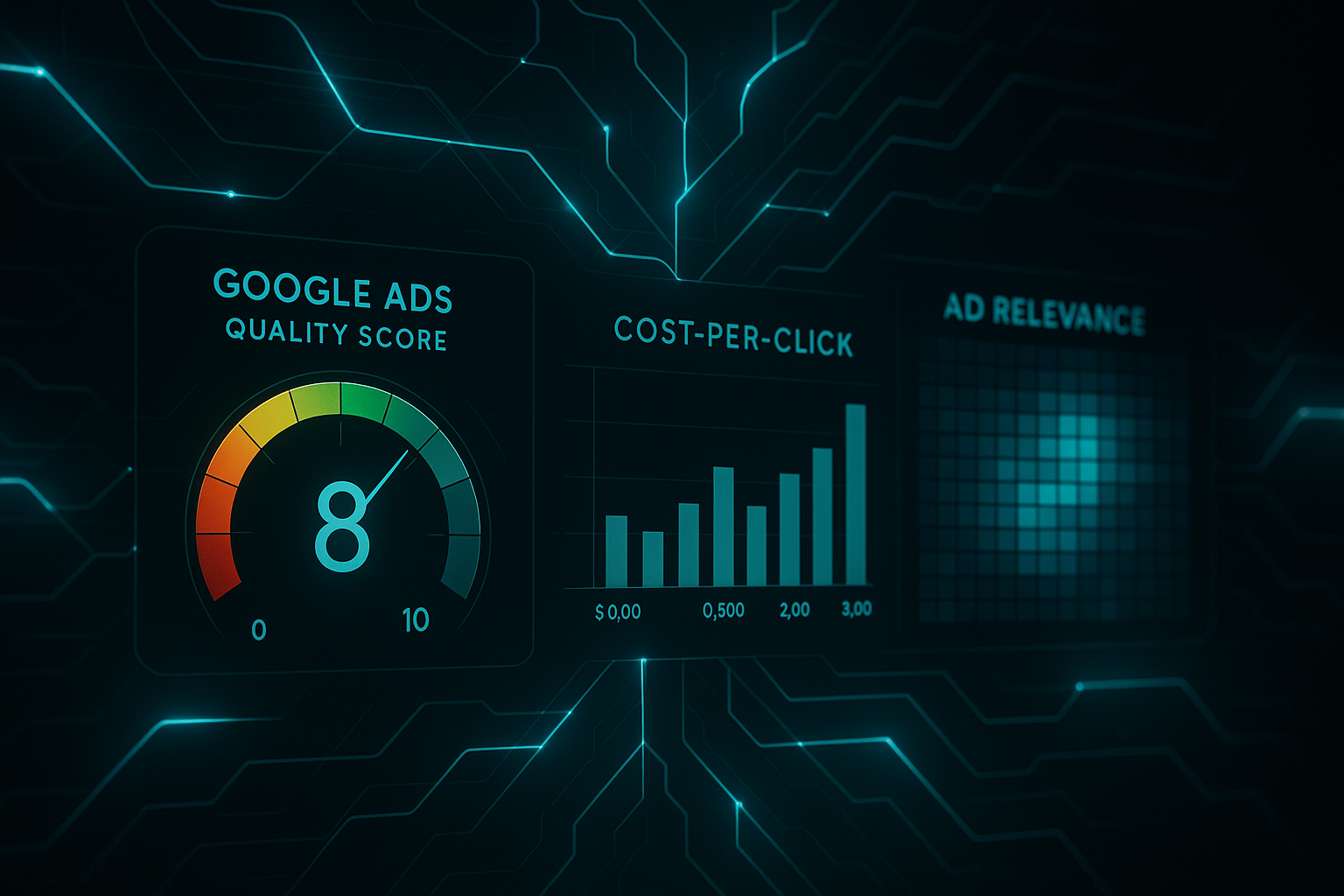
Harnessing AI to Boost Your Google Ads Quality Score

Futuristic AI dashboard showing Google Ads Quality Score and metrics

In today’s competitive digital world, a high Google Ads Quality Score is key to success. It helps you get better ad spots while keeping your costs low.

A good score leads to cheaper clicks (lower CPC) and a better return on your investment. Now, Artificial Intelligence (AI) offers marketers amazing new ways to improve every part of their campaigns. Finding the right balance between AI vs human decision-making in Google Ads is crucial. You want to use automation to help you, not replace you.

This guide explores how to use AI to improve your score and get better business results.

What Is Google Ads Quality Score?

Think of Quality Score as a grade from 1 to 10 that Google gives your ads. It measures how helpful and relevant your ads are to users. A higher score means better results.

There are three main parts to this score:

  • Ad Relevance: Does your ad text match what the user searched for?

  • Landing Page Experience: Is your website fast, mobile-friendly, and helpful?

  • Expected Click-Through Rate (CTR): How likely are people to click your ad based on past performance?

Using AI to improve these areas can boost your score significantly. However, you also need to check your account regularly. It is vital to avoid wasting money by performing systematic campaign optimization checks.

1. Improve Ad Relevance with AI

You need your ads to match exactly what people are looking for. AI makes this easier.

  • Responsive Search Ads (RSAs): Google’s AI mixes your headlines and descriptions to find the best combination. If you give it 15 headlines and 4 descriptions, the AI learns which version works best for different users.

  • AI Copywriting: Tools like ChatGPT or Google’s Duet AI can look at your past data and competitor ads to suggest better text. You can also see how generative AI enhances visual storytelling to create more exciting ads. For example, you can ask AI to: “Write 5 urgent headlines for ‘sustainable packaging’.”

  • Finding Hidden Keywords: AI tools (like Semrush or Ahrefs) can find “long-tail keywords”—specific phrases that have less competition. These often cost less and bring in better customers.

2. Create Better Landing Pages

Getting a click is only half the battle. Your website needs to keep the user interested.

  • Personalization: Tools like Dynamic Yield can change the text or images on your website based on who is visiting. If the content matches the user, they stay longer, which improves your score.

  • Automated Testing: Google and Adobe offer tools that test different versions of your webpage automatically. They learn which layout gets the most sales and send more traffic there.

  • Speed Checks: Slow sites hurt your score. Use AI tools to find and fix speed issues. Understanding why letting AI bots crawl your site matters is essential for good SEO and a high Quality Score. A faster, mobile-friendly site helps everyone.

3. Smarter Bidding with Predictive Analytics

AI is great at predicting the future using past data.

  • Smart Bidding: Google’s strategies now include “Maximize conversion value.” AI guesses which searches will make money and adjusts your bid in real-time. This is part of a larger shift in AI for marketing transformation.

  • Predicting Trends: By connecting your data to AI models, you can predict busy times like holidays. For online stores, mastering the holiday sales calendar allows you to adjust your budget before the rush, keeping your Quality Score high when it matters most.

4. Automation & Constant Updates

AI works 24/7 to keep your ads performing well.

  • Scripts: You can use simple code (scripts) to automatically pause bad keywords or change bids when performance drops.

  • Performance Max: This tool uses Google’s full AI power to show ads across Search, YouTube, Gmail, and more. It optimizes everything to get you the most conversions. It is a prime example of how AI is revolutionising Google Ads through efficiency and precision.

  • Auto-Recommendations: Check the “Insights” page in Google Ads. The AI will suggest simple fixes, like adding a keyword or changing an image, to quickly boost your score.

5. Ethics & Privacy

As AI uses more data, keeping user trust is essential.

  • Respect Privacy: Laws are changing. Ensure your AI tools respect user consent and use anonymous data. Knowing the Google Advertiser verification requirements helps you build trust and keep your ads running smoothly.

  • Transparency: Use dashboards that show you why an AI made a decision. This helps you stay accountable. The importance of conversion tracking is even greater now, as you need good data to guide the AI.

Conclusion

AI is no longer optional—it is the backbone of successful Google Ads campaigns. By using AI to write copy, personalize pages, and bid smarter, you can raise your Quality Score and lower your costs.

For businesses wanting to grow, learning how to scale your clothing brand with Google Ads using these AI strategies is the next step. Stay updated on the latest features to keep your campaigns ahead of the curve.